
Introduction
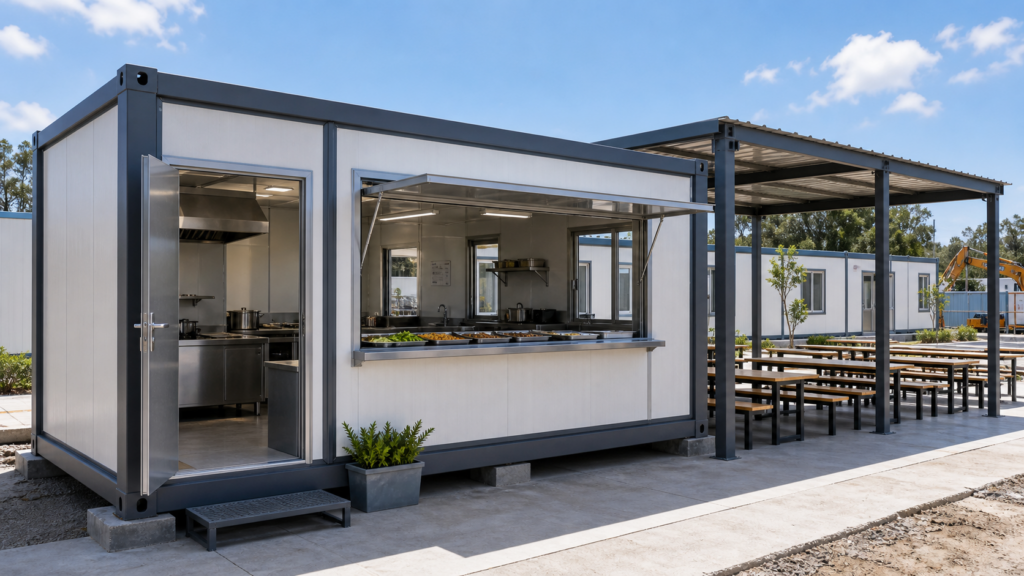
A Canteen Container is a practical modular building solution for project sites that need clean, fast, and organized food service space. It can be used as a container kitchen, dining hall, food preparation room, serving area, or worker camp canteen. For construction sites, mining camps, factories, remote projects, schools, and temporary accommodation areas, a well-designed canteen container can make daily meal service easier to manage.
Unlike a normal temporary shed, a Canteen Container can be planned with proper kitchen layout, ventilation, water supply, drainage, washable surfaces, storage, serving windows, and dining flow. When the design is done correctly, it supports both worker comfort and site operation efficiency.
1. What Is a Canteen Container?
A Canteen Container is a prefabricated container-style building designed for cooking, serving, or dining. It usually uses a steel frame, insulated wall panels, roof system, floor system, windows, doors, electrical wiring, water supply, drainage, lighting, ventilation, and optional kitchen equipment.
The building can be a single container unit or a larger modular dining hall made from several connected units. A small canteen may include only a serving window and simple kitchen area. A larger worker camp canteen may include food preparation zones, storage rooms, dishwashing areas, dining rooms, handwashing points, and staff access.
This type of building follows the same modular planning logic as a Modular House, but the internal layout must focus on food service, hygiene, and efficient movement.
2. Why Project Sites Need Modular Canteens
Food service is a daily requirement on many project sites. Workers need reliable meals, clean dining space, and convenient access during short meal breaks. If the canteen is poorly planned, it can create long queues, messy storage, poor ventilation, and sanitation problems.
A Canteen Container helps solve these problems by creating a dedicated, organized food service area. It can be installed close to dormitories, offices, or work zones while still keeping cooking and dining activities separated from other site operations.
For sites using a Flat Pack Container House or other modular accommodation system, a canteen container can become part of the same camp layout. This makes the whole project site easier to plan, transport, and expand.
3. Layout Planning Comes First
The layout is the most important part of a Canteen Container. Before production, buyers should decide whether the unit will be used for cooking, serving, dining, or all three. Each function needs different space planning.
Kitchen Area
The kitchen area should allow workers to prepare food safely and move without crowding. Cooking equipment, worktables, sinks, storage shelves, and refrigerators should be arranged in a logical workflow.
Serving Area
The serving window or counter should be easy for workers to access. It should also avoid blocking the kitchen staff. For large camps, multiple serving points can reduce waiting time.
Dining Area
The dining area should have enough seating, clear walking paths, good ventilation, and easy cleaning. For hot climates, shaded outdoor dining can be useful.
Storage and Cleaning
Food storage, dry storage, cleaning tools, and waste handling should not be ignored. A good design separates clean and dirty areas as much as possible.
4. Food Safety and Hygiene Details
A canteen building must be easy to clean and maintain. Food service spaces should use washable surfaces, proper drainage, suitable flooring, and ventilation systems that reduce heat, smoke, and moisture.
The U.S. FDA provides the FDA Food Code, which is a useful reference for understanding food service safety principles. Even if a project is outside the United States, buyers can still use the general idea: food preparation spaces should be designed to reduce contamination risks and support safe operation.
For a Canteen Container, hygiene planning should include handwashing points, non-slip floors, cleanable wall surfaces, food storage zones, waste collection, pest control, and safe water supply.
5. Ventilation Is Critical
Cooking creates heat, steam, smoke, and odor. Without proper ventilation, a container kitchen can become uncomfortable very quickly. Ventilation should be planned before production, not added randomly after installation.
A good canteen container may need exhaust fans, ventilation hoods, air conditioning openings, fresh air inlets, and roof or wall vents. The exact system depends on the cooking method, local climate, number of meals, and kitchen equipment.
The World Health Organization shares general food safety guidance through its food safety resources, including the importance of safe food handling and preventing contamination. Proper ventilation and cleanable kitchen design support these broader food safety goals.
6. Water Supply and Drainage
A Canteen Container usually needs more utility planning than a normal office or dormitory unit. Water supply and drainage are essential for cooking, cleaning, handwashing, dishwashing, and floor maintenance.
Before ordering, buyers should confirm sink quantity, water pipe route, drainage point, grease handling, floor slope, and connection to the site wastewater system. In remote locations, water storage tanks and wastewater tanks may also be needed.
If the canteen is part of a larger worker camp, utility planning should be coordinated with dormitories, toilets, laundry rooms, and other service buildings. A Detachable House style system may help when the camp needs future relocation.
7. Materials for Daily Heavy Use
A canteen is used every day, often by many people. Materials should be stronger and easier to clean than those used in a simple office unit. Buyers should pay attention to flooring, wall panels, doors, windows, countertops, sinks, and hardware.
For the kitchen area, stainless steel worktables and easy-clean wall surfaces are often useful. For the dining area, durable flooring and washable interior panels can reduce maintenance work. In humid or coastal areas, anti-rust treatment for steel parts is important.
The building should also be designed for fire safety, especially if cooking equipment, gas systems, or high-power electrical appliances are used. Local regulations and professional installation requirements should always be checked.
8. Transport and Installation
A Canteen Container can be shipped as an assembled unit, flat pack system, or modular component system depending on the design. For export buyers, packing volume and installation method directly affect the total project cost.
If the canteen includes kitchen equipment, buyers should confirm whether the equipment is installed before shipment or added after the building arrives. Some equipment may need separate packing to avoid damage during transport.
For temporary camps or changing project sites, a [Collapsible House](/collapsible-house-fast-deployment/) or fast-deployment modular system may also be considered for support buildings. The best choice depends on the project timeline, transport route, site labor, and future relocation plan.
9. How to Choose the Right Canteen Container Supplier
When choosing a supplier, do not only compare the container size and price. A canteen is a functional building, so the supplier should understand kitchen workflow, utility planning, ventilation, drainage, material durability, and installation support.
Buyers should ask for layout drawings, equipment options, panel specifications, floor material, electrical plan, plumbing plan, packing details, and installation instructions. For larger camps, the supplier should also help coordinate the canteen with dormitories, offices, toilets, and outdoor circulation.
FoodSafety.gov provides basic food safety guidance for handling and preventing foodborne illness. While it is not a container building design guide, it is a useful reminder that food service buildings should support clean, safe, and organized daily operation.
10. Common Mistakes to Avoid
The first mistake is making the kitchen too small. If the kitchen cannot support the number of meals required, staff will struggle every day.
The second mistake is ignoring ventilation. A canteen with poor ventilation can become hot, smoky, and uncomfortable.
The third mistake is forgetting drainage. Kitchens need reliable drainage for cleaning and dishwashing.
The fourth mistake is choosing materials that are hard to clean. A lower initial cost can become a maintenance problem later.
The fifth mistake is not planning worker flow. The entrance, serving line, dining area, and exit should be arranged to reduce crowding.
Conclusion
A Canteen Container is a practical choice for project sites that need fast, clean, and organized food service space. It can serve as a modular kitchen, dining hall, worker camp canteen, serving room, or temporary food service building.
The best results come from early planning. Buyers should confirm kitchen layout, serving flow, dining capacity, ventilation, water supply, drainage, cleaning materials, transport method, and installation support before ordering. With the right design, a Canteen Container can improve daily site operation and create a better meal environment for workers.
FAQ
What is a Canteen Container?
A Canteen Container is a prefabricated container-style building used for cooking, serving, dining, or food service on project sites, camps, factories, and temporary facilities.
Can a canteen container include a kitchen?
Yes. A canteen container can include kitchen equipment, sinks, worktables, storage, ventilation, electrical systems, water supply, and drainage depending on the project requirements.
Is a canteen container suitable for worker camps?
Yes. It is commonly used for worker camps because it can provide organized meal service close to dormitories and site offices.
What should buyers check before ordering?
Buyers should check layout, kitchen workflow, ventilation, water supply, drainage, flooring, wall panels, electrical load, equipment options, packing method, and installation support.
Can a canteen container be relocated?
Yes. Many canteen containers can be relocated, but the ease of moving depends on the structure, utility connections, kitchen equipment, foundation, and installation method.